Strangers Who Make Magic: The Unexpected Power of Creating With People You've Never Met
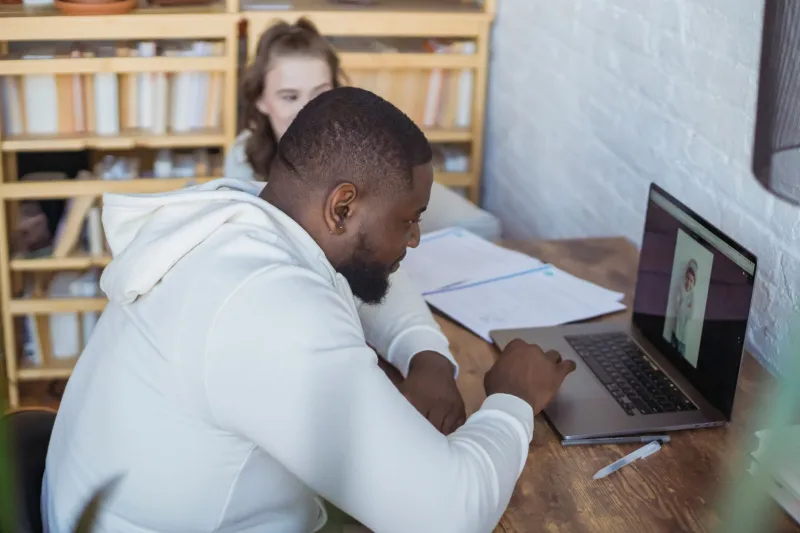
There's a producer in Atlanta laying down a beat at midnight. A singer-songwriter in Portland is awake at the same hour, headphones on, humming a melody she can't shake. They've been making music together for two years. They've never been in the same city.
This kind of story used to feel like an exception — a quirky footnote in some indie music blog. Now it's basically Tuesday. Across every creative lane imaginable — music, visual art, podcasting, fiction writing, game design, video production — some of the most compelling work being made today is being built by people who exist to each other almost entirely as avatars, voice memos, and shared Google Docs.
And here's the thing nobody's saying loudly enough: for a lot of creators, the distance isn't the obstacle. It's the advantage.
Why the Internet Keeps Throwing the Right People Together
Before platforms gave us global reach, creative chemistry was largely a geography game. You collaborated with whoever was in your city, your scene, your school. That proximity produced a lot of great work — but it also meant your creative circle was only as wide as your zip code.
Now the matchmaking happens differently. A visual artist posts a work-in-progress on a community forum. A writer sees it and DMs them about a potential project. A musician drops a snippet in a Discord server and wakes up to a message from a filmmaker three time zones away who wants to use it. The discovery is organic, interest-driven, and weirdly precise.
What's happening is that the internet is sorting people by creative frequency rather than physical location. You're not finding collaborators because they live nearby — you're finding them because they care about the exact same weird, specific thing you care about. That's a fundamentally different foundation for a creative relationship, and it tends to produce work that feels less like compromise and more like convergence.
The Ego Thing (And Why Distance Actually Helps)
Let's be honest about something: in-person creative collaboration can get political fast. There's the subtle competition of who gets credit. The unspoken hierarchy of whose studio you're working in. The way a collaborator's body language in the room can derail a session before a single idea gets voiced.
Remote creative work strips a lot of that away. When you're trading files and leaving timestamped voice notes, the work becomes the center of gravity — not the personalities around it. There's less performance, less posturing. You send something, they respond to it, you build. The feedback loop is cleaner.
Creators who've made the shift often describe their remote collaborations as surprisingly ego-lite. You're not defending your idea in real time with someone staring at you. You have space to sit with feedback, process it, and respond from a less reactive place. That breathing room? It quietly changes the quality of the conversation.
The Miscommunication Problem Is Real — Don't Pretend It Isn't
None of this is to say remote creative collaboration is frictionless. It absolutely is not.
Tone is one of the first casualties of text-based communication. A note that reads as constructive to the person writing it can land as dismissive to the person receiving it — especially when you've never heard each other's voices, never read each other's faces. Creative feedback is already vulnerable territory. Without the softening effect of in-person delivery, things can go sideways in a hurry.
Then there's the async problem. When you're working across time zones, momentum is genuinely hard to maintain. You finish a section and send it over, then wait eighteen hours for a response. By the time it comes back, you've mentally moved on — or worse, you've started second-guessing the whole thing. That lag can quietly kill projects that had real potential.
The creators who navigate this well tend to be deliberate about it. They establish communication norms early. They over-explain their intent. They schedule occasional voice or video check-ins, not to replicate in-person collaboration, but to maintain the human thread that keeps the partnership from feeling transactional.
What the Distance Actually Produces
Here's where it gets interesting. Beyond just making collaboration possible despite geography, the remote format seems to unlock certain creative outcomes that proximity actually works against.
For one, the physical separation tends to preserve individual voice. When you're in a room with someone, there's a natural pull toward consensus — you start softening your instincts to meet in the middle. Remote collaboration lets each person bring a more fully-formed version of their perspective to the table. The result is work that feels like it contains two distinct sensibilities rather than one blended, averaged-out compromise.
There's also something to be said for the way distance breeds intentionality. When communication takes effort, you tend to make it count. You think harder about what you're sending. You articulate your vision more carefully because you can't just gesture at something and say "you know what I mean." That forced clarity often surfaces ideas that would have stayed vague in a room full of nods.
And then there are the unexpected cross-pollinations — the moments when two creators from completely different cultural contexts bring references and influences that would never have collided otherwise. A filmmaker in Chicago collaborating with an animator in New Mexico isn't just splitting the workload. They're mixing two entirely different sets of lived experiences, aesthetic histories, and creative instincts. That friction, when it's productive, generates something neither could have made alone.
The Isolation Side No One Talks About Enough
For all its advantages, remote-only creative work carries a particular kind of loneliness that's worth naming. Making things is already an emotionally exposing process. Doing it without a physical community around you — without someone to grab coffee with after a session, without the informal energy of a shared creative space — can start to feel isolating in ways that slowly drain your enthusiasm.
This is especially true for creators who are newer to the work and still building confidence. There's a lot of reassurance that comes from being physically present with someone who believes in what you're making. A text message that says "this is great" hits differently than someone leaning back in their chair and genuinely lighting up.
The answer isn't to dismiss remote collaboration — it's to build the in-person community separately, even if it's not your primary creative outlet. Local meetups, creative co-working spaces, platforms like Loyeyje where community interaction is baked into the experience — these aren't replacements for your remote creative partnerships. They're the support structure that keeps you from burning out while you're building them.
The Future Isn't Remote or In-Person. It's Both.
The most interesting creators working today aren't choosing between these modes. They're moving between them fluidly — building deep remote partnerships across the country while also maintaining local creative relationships, community spaces, and shared experiences.
What the collab paradox really reveals is this: creative chemistry was never actually about physical proximity. It was always about alignment — shared obsessions, complementary instincts, the willingness to be genuinely changed by someone else's perspective. Geography just used to be the filter we ran everything through by default.
Now we have other filters. Better ones, maybe.
Somewhere right now, two people who have never met are making something neither of them could have made alone. The file is bouncing between cities, the ideas are stacking up in a shared folder, and the result is going to surprise both of them.
That's not a workaround. That's just how it works now.