Nobody Warned You That Creating Together Could Break You: The Real Cost of Collaboration

There's a version of collaboration that lives in highlight reels. Two creators vibing in a studio, laughing through the hard parts, shipping something neither could've made alone. It's the kind of content that gets reshared across every corner of the internet with captions like this is the dream and goals fr.
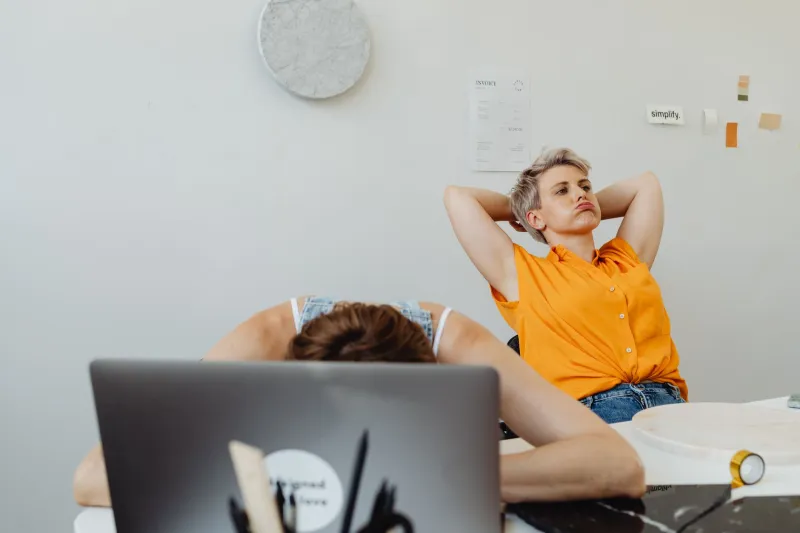
Then there's the version nobody posts. The 2 a.m. spiral after a feedback call that felt more like a verdict. The slow, creeping resentment when your partner pivots the whole direction and you smile and say "yeah, totally." The exhaustion of having to justify every creative instinct to someone else before you're allowed to act on it.
Collaboration has a tax. And a lot of creators are paying it without ever checking the bill.
The Myth That Togetherness Is Always Better
American creative culture has a complicated relationship with the lone genius. We love the origin story — the person alone in their room who builds something extraordinary. But we also worship the duo, the squad, the collective. Think of every iconic creative partnership you've heard about and you'll notice we tend to romanticize the output while quietly ignoring the chaos that produced it.
The assumption underneath all of it is that collaboration is inherently healthier than working alone. Shared burden. Mutual accountability. Built-in support. And sure, sometimes that's exactly what it is. But sometimes — more often than people admit — collaboration is actually harder on your mental health than going solo, because it adds a whole layer of interpersonal complexity on top of the creative challenge you were already trying to navigate.
You're not just making something. You're managing a relationship while making something. Those are two very different jobs.
Where the Drain Actually Comes From
Let's talk specifics, because "collaboration is hard" is vague enough to be useless.
Decision paralysis is one of the first places people start bleeding energy. When you're working alone, you make a call and move. When you're working with someone else, every decision becomes a negotiation. That's not always bad — sometimes the pushback produces something better. But when it happens constantly, across every micro-choice in a project, it creates a kind of cognitive fatigue that solo creators rarely experience at the same intensity.
Ego friction is the one nobody wants to name out loud. You've got two people who both care deeply about the work, both have strong opinions, and both secretly believe their instincts are right. That's not a character flaw — it's actually what makes good collaborators good. But it means you're regularly in a low-grade conflict state, even when things seem fine on the surface. That ambient tension is exhausting in a way that's hard to measure but very easy to feel.
Emotional labor redistribution is sneakier. In most creative partnerships, one person ends up doing more of the relational maintenance — checking in, smoothing over friction, keeping the energy up when the project gets hard. If that person is you, you might not even realize how much of your capacity is going toward holding the partnership together rather than actually creating.
And then there's creative self-erasure, which might be the most damaging thing of all. It happens gradually. You soften an idea because you're not sure your partner will get it. You pull back from a direction that feels true to you because it'll require too much convincing. Over time, you stop bringing your full self to the work — not because anyone asked you to, but because the path of least resistance became a habit.
When the Payoff Stops Covering the Cost
None of this means collaboration is bad. It means collaboration is a transaction, and like any transaction, it can go sideways when the exchange stops being fair.
The moment to pay attention to is when you start dreading the work. Not the specific task — the collaboration itself. When checking your messages from your creative partner feels like a weight settling on your chest instead of a spark of energy, something's off. When you feel more relief than excitement at the idea of working alone for a day, that's information worth sitting with.
Burnout in creative partnerships often gets misdiagnosed as burnout from the project. People walk away from the work when what they actually needed to walk away from — or at least renegotiate — was the dynamic.
Protecting Yourself Without Blowing It Up
Here's the honest truth: you can set limits in a collaboration without tanking the whole thing. In fact, you probably have to, if you want the partnership to survive long-term.
Name the invisible labor. If you're doing the emotional heavy lifting, say so — not as an accusation, but as information. "I've been noticing I'm spending a lot of energy managing the team vibe and I need us to share that more" is a reasonable thing to say to a creative partner.
Protect some creative territory that's just yours. Even inside a collaboration, you need space to make decisions without consensus. Whether that's a specific section of the project, a side creative practice, or just the freedom to bring fully-formed ideas rather than half-baked ones that get picked apart — find the zone where your instincts get to run free.
Build in actual decompression time. Not "we'll take a break when the project is done," because it never is. Scheduled space between intense collaborative sessions matters. Your nervous system needs to remember what it feels like to just be a person, not a creative partner in a negotiation.
Get honest about whether the output justifies the input. This one's uncomfortable, but worth asking: is what you're making together actually better than what you'd make alone? Not theoretically — actually? If the answer is no, that doesn't mean you have to end the partnership, but it does mean you need to figure out what you're actually getting from it, and whether that thing is worth what it's costing you.
The Work Should Feel Like Something
Here at Loyeyje, we talk a lot about the joy of creating — the rush of making something and putting it into the world, the connection that comes from sharing it with people who care. And collaboration, at its best, amplifies all of that. There's something genuinely electric about building with another person, watching an idea get bigger than either of you could've taken it alone.
But that electricity has to be worth the wiring. If the process is quietly hollowing you out, it doesn't matter how good the final product is — you're going to have nothing left to make the next thing with.
The most sustainable creative life isn't the one where you push through no matter what. It's the one where you're honest enough about your limits to actually protect them. Sometimes that means renegotiating a partnership. Sometimes it means stepping back entirely. And sometimes it just means admitting, out loud, that creating together is costing you more than you let on.
That admission isn't weakness. It's the first real move toward making something you can actually sustain.